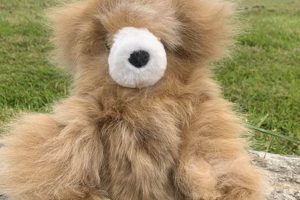
Small, often handmade garments designed for teddy bears and other stuffed toys constitute attire for these cherished companions. These miniature outfits can range from simple dresses and shirts to elaborate costumes and accessories, reflecting the creativity and care of their creators. An example would be a hand-knitted sweater sized perfectly for a small bear.
Creating and dressing stuffed animals fosters imaginative play and nurtures creativity, particularly in children. It allows for the personalization of beloved toys, strengthening the emotional bond between child and companion. Historically, dressing dolls and toys has been a common practice across cultures, often reflecting contemporary fashion trends and societal values. This tradition continues with teddy bears and other plush toys, providing an outlet for creative expression and storytelling.
This article will explore the various aspects of miniature garments for plush toys, covering topics such as the history of doll clothing, the different types of materials used, the diverse range of styles available, and the growing community of artisans dedicated to this craft. Furthermore, it will delve into the psychological benefits of this creative pastime and its significance in childhood development.
Tips for Creating Plush Toy Attire
Creating attire for stuffed animals can be a rewarding endeavor. These tips offer guidance for crafting miniature garments, whether one is a novice or an experienced sewer.
Tip 1: Consider the Scale: Accurate measurements are crucial. Carefully measure the toy’s dimensions before starting any project. Ill-fitting garments detract from the overall aesthetic.
Tip 2: Fabric Selection: Choose fabrics appropriate for the scale of the project. Lightweight materials like cotton or felt are often preferred for smaller toys. Heavier fabrics can overwhelm the toy’s form.
Tip 3: Simple Patterns: Begin with basic patterns, gradually progressing to more complex designs as skills develop. Simplicity often yields the most elegant results, especially for beginners.
Tip 4: Secure Fastenings: Employ closures appropriate for the intended use. Velcro, snaps, or buttons provide practical and safe options for dressing and undressing the toy.
Tip 5: Finishing Touches: Small details enhance the overall appearance. Consider adding embellishments such as ribbons, buttons, or embroidery to personalize the garment.
Tip 6: Adapting Existing Patterns: Human clothing patterns can be scaled down and adapted for plush toys. This offers a starting point for creating more intricate designs.
Tip 7: Explore Different Techniques: Experiment with various crafting methods, including knitting, crocheting, and sewing. Each technique offers unique possibilities for creating distinct textures and styles.
By following these tips, crafters can create well-fitting, aesthetically pleasing garments that enhance the charm of their plush companions. Attention to detail and careful planning are essential for successful miniature garment construction.
This exploration of tips and techniques provides a comprehensive guide to crafting attire for plush toys. The following section will offer concluding thoughts and resources for further exploration.
1. Miniature Garments

Miniature garments are the essence of teddy clothes. The term “teddy clothes” specifically refers to clothing created for teddy bears and similar plush toys. These garments, scaled down to fit the proportions of the toy, are integral to the concept. Without miniature garments, the notion of “teddy clothes” ceases to exist. The relationship is one of direct definition: teddy clothes are miniature garments tailored for plush companions. For example, a tiny hand-knitted sweater designed to fit a teddy bear exemplifies this connection; it is a miniature garment and, therefore, falls under the category of teddy clothes. A child selecting a small outfit for their teddy bear engages with this concept directly, demonstrating the practical application of miniature garments as teddy clothes. This understanding allows for a more precise definition and appreciation of the craft and purpose behind creating these items.
The importance of miniature garments in the context of teddy clothes extends beyond mere definition. They are a tangible expression of care, creativity, and imaginative play. The act of creating or selecting these miniature garments fosters a sense of connection between the owner and the toy. Consider a child meticulously choosing a miniature hat and scarf for their teddy bear on a cold day; this action imbues the toy with personality and reflects the child’s nurturing instincts. Similarly, an adult crafting elaborate miniature gowns for a collection of antique dolls demonstrates a sophisticated level of skill and artistic expression within this specific niche. These examples illustrate the diverse range of applications and significance that miniature garments hold within the broader concept of teddy clothes.
In summary, miniature garments are not merely a component of teddy clothes; they are its defining feature. Understanding this connection clarifies the concept and highlights the practical and emotional significance of these small garments. The creation and use of miniature garments for plush toys represent a rich interplay of creativity, care, and imaginative play, impacting both childhood development and adult artistic expression. Further exploration could delve into the historical evolution of miniature garment creation, the diverse materials employed, and the burgeoning communities dedicated to this craft.
2. Designed for teddy bears

The phrase “designed for teddy bears” is crucial to understanding “teddy clothes.” It establishes the intended recipient of these garments, differentiating them from other types of miniature clothing. This specificity is essential. While doll clothes also exist as miniature garments, they differ in design and purpose due to the distinct shapes and sizes of dolls compared to teddy bears. A dress intended for a slim fashion doll, for example, would likely not fit a teddy bear’s plump physique. The design considerations for teddy bear clothes often prioritize ease of dressing and undressing due to the simpler forms of these toys. Closures are often adapted for small hands and the overall construction is typically more robust to withstand the rigors of childhood play. This inherent focus on teddy bears’ unique characteristics dictates the materials, patterns, and construction techniques employed in creating appropriate attire.
Consider the practical implications. A teddy bear’s form often necessitates looser-fitting garments or those with adjustable closures. The soft, plush nature of the toy requires materials that complement this texture, avoiding rough or scratchy fabrics that might damage the fur. Patterns for teddy bear clothes are specifically drafted to accommodate the bear’s proportions, including its relatively short limbs and broader torso. These design choices illustrate the direct cause-and-effect relationship between the intended recipient (teddy bears) and the resulting garment design. One can observe this principle in action by comparing commercially produced teddy bear clothes to doll clothes; the differences in fit, fabric choice, and overall construction become immediately apparent.
In summary, the phrase “designed for teddy bears” is not merely descriptive; it is a defining characteristic of teddy clothes. It dictates design choices, material selection, and construction techniques, ultimately shaping the very nature of these miniature garments. Understanding this connection allows for a deeper appreciation of the craftsmanship involved and the role these garments play in childhood play and emotional development. Further exploration might consider the historical evolution of teddy bear clothing design alongside the evolving form of the teddy bear itself, revealing a dynamic interplay between toy design and the miniature garment industry.
3. Enhance imaginative play

The capacity of teddy clothes to enhance imaginative play constitutes a significant aspect of their function. Providing children with miniature garments for their plush companions acts as a catalyst for creative storytelling. This connection stems from the inherent human tendency to project narratives onto beloved objects. Dressing a teddy bear in a fireman’s outfit, for example, might inspire a child to enact a rescue scenario, fostering problem-solving skills and emotional development. Similarly, adorning a teddy bear in a doctor’s coat can facilitate role-playing related to caregiving and empathy. These examples illustrate a cause-and-effect relationship: the presence of teddy clothes directly influences and expands the possibilities of imaginative play. This impact underscores the importance of “enhancing imaginative play” as a core component of understanding the significance of teddy clothes.
Consider the practical significance of this understanding. Recognizing the link between teddy clothes and imaginative play encourages intentional design and selection of these garments. Parents and educators can leverage this connection to facilitate specific learning outcomes, using themed outfits to explore different professions, historical periods, or cultural traditions. Furthermore, providing children with diverse options for teddy bear attire nurtures self-expression and individual creativity. A child choosing to dress their bear in a brightly colored, mismatched ensemble demonstrates a unique perspective and a willingness to experiment with aesthetic choices. These practical applications highlight the value of understanding how teddy clothes can serve as tools for cognitive and emotional development.
In summary, the ability of teddy clothes to enhance imaginative play represents a crucial aspect of their overall significance. This connection stems from the inherent human propensity for narrative projection and role-playing. Understanding this relationship allows for a more informed approach to the design, selection, and utilization of teddy clothes, maximizing their potential as tools for fostering creativity, problem-solving skills, and emotional development. Further exploration could delve into the specific ways different types of teddy clothes can inspire various forms of imaginative play, offering practical guidance for parents, educators, and toy designers.
4. Reflect creativity
The act of creating or selecting teddy clothes reflects the creativity of the individual involved. This connection operates on multiple levels, encompassing both the design and application of these miniature garments. Designing teddy clothes, whether through sewing, knitting, or other crafting methods, necessitates creative problem-solving. Considerations of scale, material choice, and garment functionality challenge the creator to adapt techniques and innovate within the constraints of the miniature format. Selecting pre-made teddy clothes, while not involving direct creation, also offers an avenue for creative expression. Choosing specific outfits based on personal preferences, narrative intentions, or aesthetic sensibilities reflects individual style and imagination. This dual nature of creative reflection, encompassing both creation and curation, establishes “reflect creativity” as a fundamental component of understanding “what is a teddy clothes.”
Consider the practical implications. A child selecting a superhero costume for their teddy bear demonstrates imaginative role-playing and character development. An adult meticulously crafting a historically accurate miniature ballgown for an antique teddy bear showcases advanced sewing skills and an appreciation for historical fashion. These examples illustrate the diverse range of creative expression facilitated by teddy clothes. Furthermore, the act of creating and sharing patterns for teddy clothes within online communities fosters collaborative creativity and knowledge exchange. This shared creative space expands the potential for individual expression and strengthens the collective understanding of teddy clothes as a creative medium. The practical significance of this understanding lies in its potential to encourage and nurture creativity across different age groups and skill levels.
In summary, “reflect creativity” represents a core aspect of “what is a teddy clothes.” This connection manifests in the design, selection, and application of these miniature garments. Understanding this relationship highlights the potential of teddy clothes as tools for fostering creativity, self-expression, and imaginative play. Further exploration might investigate the psychological benefits of engaging with teddy clothes as a creative outlet and the role of online communities in facilitating this process. This deeper understanding can inform strategies for promoting creative development through the seemingly simple act of dressing a teddy bear.
5. Strengthen emotional bonds
The capacity of teddy clothes to strengthen emotional bonds constitutes a significant aspect of their overall importance. This connection stems from the role teddy bears often play as transitional objects, providing comfort and security to children. Dressing these cherished companions in miniature garments further personalizes the relationship, deepening the emotional connection. This exploration will examine the multifaceted ways teddy clothes contribute to strengthening emotional bonds, emphasizing their role as more than mere accessories.
- Personalization and Identity
Teddy clothes allow for the personalization of a cherished companion, imbuing it with unique characteristics that reflect the owner’s personality. A child selecting a specific outfit for their teddy bear expresses their individual preferences and creates a shared identity with the toy. This act of personalization strengthens the emotional bond by transforming the bear from a generic object into a unique companion, intimately connected to the child’s sense of self. For example, a child dressing their bear in a similar outfit to their own strengthens the sense of shared experience and connection.
- Nurturing and Caregiving
The act of dressing a teddy bear mimics the caregiving behaviors children observe in their own lives. Selecting and putting on miniature garments replicates the actions of dressing oneself or a younger sibling, fostering a sense of responsibility and empathy. This process reinforces nurturing instincts and strengthens the emotional bond between the child and the toy by establishing a dynamic of care and protectiveness. A child carefully buttoning up their bear’s miniature coat, for instance, demonstrates this nurturing behavior in action.
- Memory and Continuity
Teddy clothes can become imbued with sentimental value, acting as repositories of memories and emotional significance. A hand-knitted sweater passed down through generations, for example, carries with it a history of family connection and emotional resonance. Dressing a beloved teddy bear in such a garment strengthens the emotional bond by linking the present moment to cherished memories and establishing a sense of continuity across time. These tangible reminders of past experiences deepen the emotional connection to the toy and reinforce its significance within the family narrative.
- Shared Experience and Connection
Creating or selecting teddy clothes together can be a shared experience that strengthens bonds between individuals. A parent helping a child sew a small dress for their teddy bear fosters connection through collaborative creativity. Similarly, friends exchanging handmade teddy bear outfits strengthens their friendship through the shared act of giving and receiving personalized gifts. These shared experiences surrounding teddy clothes contribute to building and reinforcing emotional connections, emphasizing the social dimension of this seemingly solitary activity.
In summary, the capacity of teddy clothes to strengthen emotional bonds represents a crucial aspect of their significance. This connection arises from the interplay of personalization, nurturing behavior, memory, and shared experience. Understanding these facets allows for a deeper appreciation of the role teddy clothes play in childhood development and the enduring emotional connections they can foster. Further exploration might investigate the therapeutic applications of teddy bears and their clothing in addressing emotional challenges and fostering resilience.
Frequently Asked Questions about Teddy Clothes
This section addresses common inquiries regarding attire for plush toys, offering concise and informative responses.
Question 1: What are the typical materials used in constructing teddy clothes?
Common materials include felt, cotton, fleece, and knit fabrics. The choice depends on the desired aesthetic, durability requirements, and the crafter’s skill level.
Question 2: Where can one acquire clothing for teddy bears?
Options include crafting garments by hand, purchasing commercially manufactured outfits from toy stores or online retailers, and commissioning custom-made pieces from independent artisans.
Question 3: Are there patterns specifically designed for teddy bear clothing?
Numerous resources offer patterns explicitly created for teddy bears and other plush toys. These patterns cater to various skill levels, from beginner-friendly designs to complex couture creations.
Question 4: What are the benefits of dressing teddy bears?
Dressing teddy bears fosters imaginative play, encourages creativity, and strengthens the emotional bond between a child and their cherished companion. It can also provide opportunities for developing fine motor skills and exploring personal expression.
Question 5: How does one care for teddy bear clothes?
Care instructions depend on the garment’s materials. Generally, gentle hand washing or machine washing on a delicate cycle with mild detergent is recommended. Air drying is often preferred to prevent shrinkage or damage.
Question 6: Are there historical precedents for dressing plush toys?
The practice of dressing dolls and toys has a long history, with examples found across various cultures and time periods. This tradition extends to modern plush toys, reflecting evolving fashion trends and cultural values.
Understanding the various facets of teddy bear attire, from material selection to care instructions, enhances appreciation for this craft.
The subsequent sections will delve into specific techniques for crafting teddy bear clothes and explore the historical context of this practice.
Conclusion
This exploration has comprehensively addressed the question, “What is a teddy clothes?” Analysis reveals that the term signifies miniature garments specifically designed for teddy bears and similar plush toys. Key aspects include their function in enhancing imaginative play, reflecting individual creativity, and strengthening emotional bonds between children and their cherished companions. The examination encompassed material considerations, design principles, acquisition methods, and care instructions, providing a holistic understanding of this seemingly simple yet multifaceted subject.
The significance of teddy clothes extends beyond mere adornment. These miniature garments represent tangible expressions of care, creativity, and emotional connection. Further investigation into the psychological and sociological implications of this practice promises to yield valuable insights into childhood development, creative expression, and the enduring power of transitional objects. The continued exploration of this topic offers opportunities for deeper understanding and appreciation of the role these small garments play in human experience.