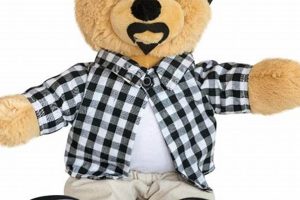
Dressing stuffed animals, particularly teddy bears, in miniature outfits for Halloween is a popular activity. These outfits range from classic monster representations (vampires, ghosts, witches) to pop culture characters and even professions. A small teddy bear might be dressed as a superhero, a pirate, or a chef, complete with tiny accessories.
This practice fosters creativity and imagination, particularly among children. Engaging with diminutive apparel allows for storytelling and role-playing, enriching playtime and potentially contributing to fine motor skill development. Historically, dressing dolls and toys reflects broader cultural trends and provides a miniature representation of societal norms and festivities. Adapting these practices for seasonal events like Halloween connects familiar play patterns with holiday traditions.
The following sections will explore various facets of this charming tradition, delving into popular outfit choices, DIY approaches, and the historical context of dressing toys for special occasions.
Tips for Creating Bear Costumes
Creating miniature costumes offers an enjoyable opportunity to engage with the Halloween season. The following tips will aid in the design and execution of successful outfits for stuffed bears.
Tip 1: Consider the Bear’s Size: Accurate measurements are crucial. Ill-fitting costumes detract from the overall effect. Measure the bear’s height, width, and limb length before beginning any project.
Tip 2: Choose Appropriate Fabrics: Felt, fleece, and cotton are recommended due to their ease of manipulation and durability. Avoid materials that fray easily or pose a choking hazard for small children.
Tip 3: Simplify Designs: Intricate designs can be challenging to execute on a small scale. Opt for simple, recognizable costumes. A basic ghost costume, for example, requires minimal sewing and remains easily identifiable.
Tip 4: Utilize Existing Clothing: Doll clothes or items from a child’s wardrobe can be repurposed. A sock can become a witch’s hat; a small scarf, a superhero cape.
Tip 5: Secure Accessories Carefully: Small buttons or decorative elements should be firmly attached to prevent detachment. Fabric glue or stitching is preferable to pins, which can be hazardous.
Tip 6: Embrace No-Sew Options: Fabric glue, safety pins, and Velcro offer alternatives to traditional sewing for those less experienced with needlework.
Tip 7: Document the Process: Photographing the creation process allows for future replication and provides a visual record of the project.
By following these suggestions, one can ensure the creation of well-fitted, safe, and visually appealing costumes. The result is a personalized, festive bear ready for Halloween.
The following section will offer concluding thoughts on the enduring appeal of this creative tradition.
1. Size and Fit

Costume suitability for teddy bears hinges critically upon size and fit. An ill-fitting costume diminishes the intended aesthetic impact and can obscure the bear’s features, detracting from the overall presentation. A costume too large may slip off, hindering display and potentially posing a tripping hazard if placed on the floor. Conversely, a too-small costume can distort the bear’s shape, create an uncomfortable appearance, and potentially damage the bear through excessive stretching or pressure. For example, a pirate costume designed for a larger bear would overwhelm a smaller build, obscuring its proportions and limiting poseability. A superhero cape sized for a smaller bear might restrict the arm movement of a larger one, preventing natural posing.
Accurate measurement of the bear is paramount for achieving the desired effect. Height, width (chest and abdomen), and limb lengths serve as critical data points. These measurements inform pattern adjustments and ensure appropriate scaling of pre-made costumes. Commercial costume manufacturers often offer sizing charts categorized by bear dimensions or manufacturer designations, facilitating informed purchasing decisions. For handmade costumes, measurements guide pattern creation and fabric cutting, ensuring proportional accuracy and a comfortable fit. Using a flexible measuring tape, analogous to measuring fabric for human garments, provides precise data. This process benefits from standardized measurement points on the bear to ensure consistency and accurate comparisons with sizing charts or patterns.
Proper size and fit maximize the visual impact of the costume, enhancing its aesthetic appeal and the overall presentation of the dressed bear. Careful consideration of these factors allows the costume to complement, rather than obscure, the bear’s features, thereby creating a harmonious and visually pleasing result. Addressing size and fit contributes significantly to a successful and enjoyable costume experience.
2. Theme Selection

Theme selection represents a crucial initial step in costuming teddy bears for Halloween. The chosen theme dictates material choices, design complexity, and the overall aesthetic impact. A well-chosen theme enhances the visual narrative and contributes to a cohesive presentation. Careful consideration of available options ensures a satisfying and engaging outcome.
- Traditional Halloween Motifs
Classic themes like ghosts, witches, vampires, and pumpkins offer readily recognizable imagery. These themes frequently utilize readily available materials like white sheets for ghosts or black felt for witch hats. Such choices simplify costume creation and resonate with established Halloween iconography. A teddy bear dressed as a traditional vampire, complete with a miniature cape and fangs, evokes a classic Halloween ambiance.
- Pop Culture References
Themes drawn from popular films, television shows, or video games offer contemporary relevance. These themes, ranging from superheroes to cartoon characters, provide opportunities for intricate design and personalized expression. However, they may require more specialized materials and construction techniques. A teddy bear dressed as a recognizable superhero, with a detailed costume and accompanying accessories, reflects current trends and appeals to a broader audience.
- Literary Characters
Themes inspired by classic or contemporary literature provide unique and often sophisticated costume choices. A teddy bear dressed as a character from a beloved children’s book fosters a connection with literary traditions. This approach might involve more elaborate design elements and require careful consideration of character details. A teddy bear dressed as Sherlock Holmes, with a miniature deerstalker hat and pipe, introduces a literary dimension to the Halloween display.
- Occupations and Roles
Dressing teddy bears as chefs, doctors, firefighters, or other professionals offers a playful approach to role-playing. These themes often incorporate readily available materials and allow for creative interpretations of occupational attire. A teddy bear dressed as a chef, complete with a miniature apron and toque, introduces a touch of whimsy to the Halloween theme.
Theme selection ultimately dictates the direction and complexity of the costuming process. Whether adhering to traditional motifs or embracing contemporary references, a carefully chosen theme enhances the teddy bear’s Halloween presentation, creating a visually engaging and narratively rich display.
3. Material Choices

Material selection significantly impacts the effectiveness and safety of teddy bear Halloween costumes. Material properties influence durability, comfort, aesthetic appeal, and the overall presentation. Choosing appropriate materials necessitates careful consideration of the intended design, the bear’s size, and potential safety concerns. Inappropriate material choices can lead to costume malfunction, discomfort for the bear (if applicable to a live bear, though the context suggests inanimate subjects), and potential hazards for young children handling the costumed bear.
Fabric selection often prioritizes ease of manipulation and durability. Felt and fleece offer excellent workability for novice crafters due to their resistance to fraying and ease of cutting and shaping. Their soft textures complement the teddy bear’s form. Cotton fabrics, while requiring more advanced sewing skills, offer breathability and a wide range of colors and patterns. These materials allow for intricate detailing and contribute to a polished appearance. Avoidance of materials with small, detachable parts mitigates choking hazards for young children. Similarly, materials prone to shedding or fraying might present ingestion risks and should be avoided. For example, a ghost costume crafted from a thin, easily torn fabric offers limited durability. Conversely, a sturdy felt witch’s hat maintains its shape and withstands repeated handling.
Material choices also influence the costume’s visual impact. Shiny satin or shimmering lame can enhance a princess or superhero costume, while textured burlap adds rustic charm to scarecrow or pirate attire. Employing contrasting textures and colors amplifies visual interest and enhances the costume’s thematic elements. The selection should align with the chosen theme and contribute to a cohesive aesthetic. A vampire cape crafted from luxurious velvet enhances the dramatic effect, while a firefighter costume benefits from the practicality and durability of canvas or denim. Consideration of material properties, including texture, weight, and drape, ensures a successful outcome and contributes to the overall quality and visual appeal of the teddy bear’s Halloween costume.
4. Safety Considerations

Safety considerations are paramount when creating or selecting Halloween costumes for teddy bears, particularly when intended for young children. Potential hazards necessitate careful evaluation of materials, design elements, and intended usage. Overlooking these aspects can lead to choking, ingestion, or entanglement risks, compromising child safety and diminishing the enjoyment of the Halloween tradition. A seemingly innocuous element, such as a loosely attached button or a small, detachable accessory, can pose a significant choking hazard for infants or toddlers. Similarly, costumes crafted from materials that shed fibers or small particles present ingestion risks. Costumes with long, trailing elements, while visually appealing, can create entanglement hazards, especially during active play. For example, a witch’s costume with a long, flowing cape might become entangled around a child’s neck during play, posing a strangulation risk. A superhero cape with detachable Velcro patches presents a choking hazard if the patches are ingested. Understanding these potential dangers informs responsible costume selection and construction.
Mitigating these risks requires proactive measures. Opting for non-toxic materials specifically designed for children’s products ensures material safety. Securely attaching all decorative elements, such as buttons, sequins, or ribbons, minimizes detachment and potential ingestion. Avoiding small, detachable parts altogether eliminates this risk entirely. Substituting fabric glue or stitching for pins in costume construction enhances safety. Regularly inspecting costumes for loose threads, detached elements, or signs of wear and tear maintains a safe play environment. Choosing costumes specifically designed for the intended age group further minimizes risks. For instance, costumes for infants and toddlers should prioritize simplicity and avoid small parts, while costumes for older children can incorporate more complex designs with appropriate safety considerations. Prioritizing safety reinforces responsible engagement with the Halloween tradition and ensures a positive and enjoyable experience for all.
Prioritizing safety during the design and selection of teddy bear Halloween costumes ensures a positive and hazard-free experience. Careful material selection, secure attachment of decorative elements, and routine inspection contribute significantly to risk mitigation. Understanding potential hazards allows for informed decision-making and responsible engagement with this festive tradition, ultimately safeguarding children’s well-being while preserving the enjoyment of Halloween festivities.
5. Creative Design

Creative design forms the crux of impactful and engaging Halloween costumes for teddy bears. Costume design transcends mere attire; it embodies narrative, character portrayal, and imaginative expression. Design choices dictate the costume’s effectiveness in conveying a specific theme or idea, transforming a simple teddy bear into a Halloween persona. This creative process encompasses several key facets. Color palettes evoke specific moods and associations vibrant orange and black for traditional Halloween themes, deep reds and purples for vampire or witch costumes, or bright, primary colors for superhero or cartoon character representations. Fabric textures contribute to the overall aesthetic rough burlap for a scarecrow, smooth velvet for a vampire cape, or shimmering lame for a fairy or princess. Accessory choices amplify the chosen theme a miniature plastic pumpkin for a jack-o’-lantern costume, a tiny witch’s hat crafted from felt, or a superhero mask fashioned from fabric scraps. The interplay of these elements distinguishes a basic costume from a truly creative and engaging ensemble. For instance, a ghost costume employing layered cheesecloth creates an ethereal effect distinct from a simple white sheet. A pirate costume incorporating weathered fabric and handcrafted accessories conveys a sense of adventurous narrative absent in a store-bought equivalent.
Creative design necessitates problem-solving within the constraints of the teddy bear’s form. Adapting design elements to the bear’s size and proportions presents unique challenges and opportunities for innovation. A costume requiring complex construction techniques might necessitate simplification for successful execution on a smaller scale. This adaptation process often fuels ingenuity, resulting in unique and effective solutions. A superhero cape designed for a small teddy bear might incorporate Velcro closures for ease of attachment and removal, while a witch’s hat for a larger bear could utilize wire framing to maintain its shape. These adaptations demonstrate the interplay between creative vision and practical constraints, a hallmark of effective costume design. Moreover, creative design elevates the costuming process beyond mere replication; it fosters individual expression and personalized storytelling. A handcrafted costume, imbued with the creator’s imagination and ingenuity, possesses a unique charm and narrative depth absent in mass-produced alternatives.
Creative design, therefore, represents a critical element in the creation of compelling and memorable Halloween costumes for teddy bears. It allows for personalized expression, thematic exploration, and problem-solving within the constraints of the medium. The resulting costumes transcend mere attire, becoming miniature works of art that enrich the Halloween tradition and inspire imaginative engagement.
6. Ease of Dressing
Ease of dressing constitutes a critical factor in the design and selection of Halloween costumes for teddy bears. The process of dressing a bear, particularly for younger children, should be straightforward and undemanding. Complicated closures, intricate fastenings, or restrictive designs detract from the overall experience, potentially leading to frustration and discouragement. A costume that requires significant effort to put on or remove diminishes the enjoyment of the activity. For example, a costume with numerous small buttons or intricate lacing might prove too challenging for young children to manipulate independently. A tight-fitting costume requiring forceful maneuvering could damage the bear or frustrate the individual dressing it. Conversely, a costume with simple Velcro closures or elastic bands facilitates quick and easy dressing, promoting independent engagement and minimizing frustration.
Furthermore, ease of dressing impacts the longevity and reusability of the costume. Costumes requiring complex manipulation are more susceptible to damage during dressing and undressing. Tears, seam separation, or detached embellishments can render the costume unusable. Simple, durable designs withstand repeated handling, preserving the costume’s integrity and maximizing its lifespan. A costume with a simple, wide opening and minimal fastenings allows for easy removal and storage, reducing the likelihood of damage during handling. This design also accommodates a wider range of bear sizes and shapes, enhancing versatility and practicality.
In summary, ease of dressing directly influences the overall enjoyment and practicality of teddy bear Halloween costumes. Prioritizing simple closures, unrestrictive designs, and durable construction ensures a positive experience for both children and adults engaging with this festive tradition. This focus on practicality enhances the costume’s longevity, promoting repeated use and maximizing its value. Ultimately, prioritizing ease of dressing contributes significantly to a positive and enjoyable Halloween experience, preserving the tradition’s charm and fostering continued engagement.
7. Durability and Longevity
Durability and longevity represent critical considerations in the realm of Halloween costumes for teddy bears. These factors influence the costume’s lifespan, its ability to withstand repeated use, and its overall value. Costumes lacking durability are prone to damage from handling, storage, and the general wear and tear associated with play. Such damage diminishes the costume’s aesthetic appeal and can render it unusable, necessitating frequent replacements. This not only increases costs but also contributes to waste. Conversely, durable costumes withstand the rigors of play and storage, preserving their appearance and functionality over extended periods. A costume crafted from robust materials, with reinforced seams and securely attached embellishments, offers greater resistance to tearing, fraying, and detachment of decorative elements. For instance, a witch’s hat constructed from sturdy felt maintains its shape and resists tearing, while a flimsy paper version might easily crumple or tear after minimal handling. A superhero cape made from durable fabric with reinforced stitching at stress points withstands the rigors of active play, whereas a cape made from delicate material with weak seams might tear easily. This directly impacts the costume’s longevity, allowing for repeated use across multiple Halloweens and maximizing its value.
The selection of appropriate materials plays a pivotal role in ensuring durability and longevity. Durable fabrics such as felt, fleece, and tightly woven cotton resist tearing and fraying. Reinforced stitching, particularly at stress points like armholes and neckline, further enhances the costume’s structural integrity. Secure attachment of decorative elements, using methods like stitching or strong adhesive, prevents their detachment during handling and play. Furthermore, appropriate storage practices contribute to the costume’s longevity. Storing costumes in a cool, dry environment, away from direct sunlight and moisture, mitigates the risk of damage from environmental factors. Using protective storage containers or garment bags prevents dust accumulation and minimizes the potential for physical damage during storage.
Investing in durable, well-constructed costumes represents a practical approach. While the initial cost might be higher, the extended lifespan and reduced need for replacements ultimately offer greater value over time. Durable costumes contribute to a more sustainable approach to seasonal celebrations by minimizing waste and promoting reuse. This aligns with environmentally conscious practices and reduces the consumption of resources. Therefore, prioritizing durability and longevity in the selection or creation of Halloween costumes for teddy bears represents a sensible and sustainable approach that maximizes value and minimizes environmental impact while preserving the enjoyment of the Halloween tradition.
Frequently Asked Questions about Teddy Bear Halloween Costumes
This section addresses common inquiries regarding the selection, creation, and utilization of Halloween costumes for teddy bears. Clear and concise responses aim to provide comprehensive information and address potential concerns.
Question 1: What are the most popular Halloween costume themes for teddy bears?
Classic Halloween figures like witches, ghosts, vampires, and pumpkins consistently rank among the most popular choices. Animal costumes, such as cats, bats, and spiders, also enjoy significant popularity. Pop culture references and superhero themes represent increasingly prevalent options.
Question 2: Where can suitable costumes be acquired?
Specialty toy stores, online retailers, and crafting marketplaces offer pre-made costumes. Alternatively, creating costumes from readily available materials presents a personalized approach.
Question 3: What materials are recommended for creating homemade costumes?
Felt, fleece, and cotton fabrics are favored for their ease of manipulation and durability. These materials are readily available and suitable for various design applications.
Question 4: What safety precautions should be observed when selecting costumes for young children?
Costumes intended for young children should avoid small, detachable parts that pose choking hazards. Non-toxic materials and secure attachment of decorative elements are essential safety considerations.
Question 5: How can costume durability be maximized?
Selecting durable fabrics, reinforcing seams, and securely attaching embellishments enhance costume longevity. Proper storage practices further contribute to preservation.
Question 6: What are the benefits of dressing teddy bears in Halloween costumes?
This activity fosters creativity, imaginative play, and engagement with seasonal traditions. Creating costumes provides opportunities for crafting and personalized expression.
Careful consideration of these frequently asked questions facilitates informed decision-making and enhances the overall experience of incorporating teddy bears into Halloween festivities. Addressing safety concerns and prioritizing durability ensures both enjoyment and responsible engagement.
The following section will provide concluding remarks on the enduring appeal of this creative practice.
Halloween Costumes for Teddy Bears
This exploration of Halloween costumes for teddy bears has encompassed various facets, from theme selection and material choices to safety considerations and creative design. The importance of size and fit, ease of dressing, and durability has been underscored. Dressing teddy bears in costumes offers an avenue for creative expression, imaginative play, and engagement with seasonal traditions. Whether store-bought or handcrafted, these costumes transform familiar companions into festive participants in Halloween celebrations.
The enduring appeal of this practice lies in its ability to bridge generations and foster shared experiences. From simple ghost costumes crafted from old sheets to elaborate character portrayals requiring intricate sewing skills, the tradition of dressing teddy bears for Halloween offers a tangible link to childhood wonder and the enduring power of imaginative play. This seemingly simple act embodies creativity, storytelling, and the celebration of seasonal festivities, enriching the Halloween experience for both young and old.