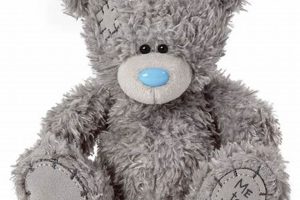
A packaged set of materials and instructions enables individuals to create a stuffed toy bear independently. Typically, such sets include pre-cut fabric pieces, stuffing, embroidery floss, needles, and a detailed guide for assembly. An example might comprise faux fur or plush material in a chosen color, pre-formed plastic eyes and nose, and thread matching the fabric.
These sets offer opportunities for creative expression and skill development. Constructing a plush toy from scratch can be a rewarding experience, fostering patience and fine motor skills. Historically, handcrafted toys held a significant place in childhood, and these modern kits offer a convenient and accessible way to perpetuate that tradition. They also provide a customizable gifting option, allowing for personalized touches that enhance sentimental value.
The following sections will explore material variations, assembly techniques, and customization options for those interested in undertaking this craft.
Tips for Crafting with Teddy Bear Kits
Careful preparation and attention to detail ensure a successful crafting experience and a well-constructed finished product. These tips offer guidance for optimal results.
Tip 1: Organize the workspace. A clean, well-lit area with sufficient space allows for efficient assembly. Clear any clutter and ensure adequate lighting to facilitate precise work.
Tip 2: Read instructions thoroughly. Before beginning, review the provided instructions completely. Familiarization with the steps prevents errors and ensures a smooth process.
Tip 3: Pre-sort materials. Organize all components according to the instructions. This preliminary step streamlines the assembly process and reduces the risk of misplacing parts.
Tip 4: Use appropriate tools. Utilize the provided tools or suitable equivalents. Sharp scissors and appropriate needles facilitate precise cutting and stitching.
Tip 5: Stuff firmly but evenly. Distribute the stuffing material evenly throughout the bear’s body, ensuring a consistent shape and avoiding lumps. Firm stuffing provides structure and durability.
Tip 6: Secure stitches tightly. Tight, even stitches ensure the seams hold securely and the stuffing remains contained. Reinforce critical areas for added strength.
Tip 7: Consider customization options. Explore embellishments such as ribbons, bows, or clothing to personalize the finished bear. This adds a unique touch and enhances sentimental value.
Adhering to these guidelines results in a satisfying crafting experience and a well-constructed, cherished keepsake.
By following these tips, one can create a treasured handmade toy.
1. Materials

Material selection significantly impacts the final appearance, durability, and overall quality of a completed stuffed toy. Understanding the various materials included within these kits is essential for informed decision-making and achieving desired results.
- Fabric
Fabric choices range from traditional plush or faux fur to felt, cotton, or even upcycled materials. The fabric type dictates the toy’s texture, appearance, and ease of sewing. Plush fabrics create a soft, cuddly feel, while felt offers a more structured finish. Fabric choice also impacts the kit’s complexity; plush materials can be more challenging for beginners to work with than felt.
- Stuffing
Polyester fiberfill is the most common stuffing material, offering softness and resilience. Other options include wool, cotton, or recycled materials. Stuffing density impacts the toy’s firmness and shape. The amount of stuffing provided in the kit should be sufficient to adequately fill the toy’s form.
- Embroidery Floss
Embroidery floss is typically included for facial features and other decorative details. The floss quality affects the finished look and durability of these elements. Kits often provide basic colors, but crafters can expand options through separate purchases. Floss color selection should complement the chosen fabric.
- Notions
Notions encompass additional components such as safety eyes, noses, jointing hardware, and ribbons or other embellishments. Quality notions contribute to the toy’s safety and aesthetic appeal. Plastic safety eyes are standard for children’s toys, while more advanced kits might include glass eyes for a more realistic look. The inclusion of jointing hardware allows for poseable limbs, adding complexity and play value.
The careful consideration of these material components ensures a satisfying crafting experience and a well-constructed finished product. Understanding the properties and limitations of each material allows crafters to make informed choices aligned with their skill level and desired aesthetic outcome.
2. Instructions

Clear, comprehensive instructions are crucial to the successful completion of a do-it-yourself teddy bear kit. Instructions serve as the guiding framework, translating the provided materials into a finished product. The clarity and precision of these instructions directly impact the ease of assembly and the final result. A well-designed instruction set anticipates potential challenges and provides preemptive solutions, minimizing frustration and maximizing the likelihood of a satisfying crafting experience. For example, a critical step like attaching limbs might require specific stitching techniques; detailed diagrams and explicit written explanations ensure proper execution, preventing structural weaknesses or aesthetic imperfections.
Instructional quality differentiates a positive crafting experience from a frustrating one. Vague or incomplete instructions can lead to errors, requiring disassembly and reassembly, potentially damaging materials. Conversely, well-structured instructions foster a sense of accomplishment and build confidence. Consider a scenario where an instruction set clearly illustrates the optimal placement of stuffing to achieve a uniform shape; this guidance prevents overstuffing in certain areas and under stuffing in others, ensuring a balanced and aesthetically pleasing finished product. Further, clear instructions regarding seam allowance and stitch type contribute to the toy’s structural integrity and longevity.
Effective instructions mitigate potential difficulties and enhance the overall crafting experience. They bridge the gap between raw materials and a finished product, empowering individuals to create something tangible and meaningful. The presence of comprehensive, user-friendly instructions distinguishes a well-designed kit, fostering a positive association with the crafting process and increasing the likelihood of continued engagement in similar creative endeavors. Challenges such as language barriers or complex diagrams can be addressed through multilingual options and supplementary visual aids. Ultimately, the quality of instructions plays a pivotal role in transforming a collection of materials into a cherished handmade item.
3. Customization

Customization represents a significant aspect of do-it-yourself teddy bear kits, offering opportunities for personalized expression and unique creations. The inherent flexibility of these kits allows crafters to move beyond pre-defined patterns and imbue their projects with individual flair. This capacity for personalization extends beyond mere aesthetics, impacting the sentimental value and overall significance of the finished product. Consider the addition of embroidered initials, a specific fabric pattern chosen to reflect a shared interest, or the inclusion of a small, meaningful trinket within the stuffing. These seemingly minor alterations transform a generic stuffed toy into a bespoke keepsake, imbued with personal meaning.
The ability to customize fosters a deeper connection between the crafter and the creation. This process transforms a simple assembly task into an act of creative expression, allowing individuals to invest a part of themselves into the final product. Practical examples include selecting specific clothing items for the bear, creating unique facial expressions through embroidery, or adding accessories like miniature hats or scarves. Such personalized touches elevate the finished piece from a generic toy to a unique, handcrafted item, reflecting the crafter’s individuality and enhancing its sentimental value. The ability to personalize fosters a sense of ownership and pride, adding an emotional dimension to the craft.
Customization, therefore, represents a crucial component of the appeal of do-it-yourself teddy bear kits. It allows for the creation of items that resonate on a personal level, fostering a sense of connection and imbuing the finished product with lasting significance. This potential for personalization distinguishes these kits from mass-produced toys, offering a pathway to create meaningful gifts or cherished personal keepsakes. While certain limitations might exist depending on the specific kit, the potential for creative adaptation remains a key driver of engagement and satisfaction within this crafting domain.
4. Skill Level

Skill level plays a crucial role in selecting and successfully completing a do-it-yourself teddy bear kit. Kits cater to a spectrum of abilities, from beginner to advanced, impacting material complexity, construction techniques, and the overall time investment required. A beginner might opt for a kit featuring pre-cut felt pieces and simple whip stitching, while an experienced sewer might choose a kit involving intricate patterns, faux fur, and more complex joining methods. Matching skill level to kit complexity ensures a positive crafting experience and minimizes potential frustration.
A mismatch between skill level and kit complexity can lead to several challenges. A beginner attempting a complex kit might encounter difficulty with intricate instructions or specialized techniques, potentially leading to discouragement and an unfinished project. Conversely, an experienced crafter might find a beginner kit overly simplistic, leading to boredom and a lack of creative fulfillment. Consider a kit requiring ladder stitch for an invisible seam closure; a beginner unfamiliar with this technique might struggle, while an experienced sewer would find it straightforward. Recognizing one’s skill level is therefore paramount in achieving a satisfying outcome and fostering continued engagement in this craft.
Understanding the relationship between skill level and kit complexity allows crafters to make informed decisions, aligning project difficulty with existing abilities and desired challenges. This awareness facilitates a positive crafting experience, fostering skill development and encouraging exploration within the craft. Careful consideration of skill level ensures project completion, maximizes enjoyment, and cultivates a sense of accomplishment. Ultimately, selecting a kit appropriate to one’s skill level contributes to a rewarding experience and encourages further exploration of creative potential.
5. Finished product
The envisioned finished product represents a crucial factor influencing kit selection and the overall crafting experience associated with do-it-yourself teddy bear kits. Characteristics such as size, style, and intended purpose (e.g., decorative item, children’s toy, personalized gift) directly impact material choices, construction techniques, and the level of customization employed. A small, decorative bear intended for a shelf display might prioritize intricate embroidery and fine materials, while a larger, child-friendly toy prioritizes durability and safety features. Clarity regarding the desired finished product informs material selection, guiding decisions related to fabric type, stuffing density, and embellishment choices. This forward-thinking approach ensures alignment between creative vision and material selection, maximizing satisfaction with the completed project.
The finished product serves as both the motivation and the culmination of the crafting process. Understanding the desired outcome influences every stage, from initial kit selection to final embellishments. For instance, a bear intended as a newborn gift might necessitate hypoallergenic materials and soft, pastel colors. Conversely, a commemorative bear for a sports enthusiast might incorporate team colors and related embellishments. Practical considerations related to the finished product, such as intended recipient, display location, and usage frequency, inform decisions throughout the construction process. This proactive approach minimizes potential discrepancies between the envisioned outcome and the realized creation.
Ultimately, a clear vision of the finished product contributes significantly to a successful and fulfilling crafting experience. This preemptive consideration of the final outcome ensures informed decision-making throughout the project, optimizing material selection, construction techniques, and customization efforts. The envisioned finished product acts as a guiding principle, shaping the creative process and ensuring alignment between intention and result. This mindful approach fosters satisfaction, reinforces crafting skills, and ultimately results in a cherished, handcrafted item that fulfills its intended purpose.
Frequently Asked Questions
This section addresses common inquiries regarding do-it-yourself teddy bear kits, providing concise and informative responses to facilitate informed decision-making and enhance the overall crafting experience.
Question 1: What skill level is required to complete a typical kit?
Kits cater to various skill levels. Beginner kits utilize simple construction techniques and pre-cut components, while advanced kits may involve complex patterns and specialized stitching. Kit descriptions typically specify the recommended skill level.
Question 2: What materials are typically included in these kits?
Standard inclusions comprise pre-cut fabric pieces, stuffing, embroidery floss, needles, and detailed instructions. Some kits may also include additional embellishments such as safety eyes, noses, or jointing hardware. Material specifics are outlined in each kit’s description.
Question 3: How long does it typically take to complete a project?
Completion time varies depending on project complexity and individual crafting pace. Simple kits might require a few hours, while more intricate projects may take several days. Estimated completion times are often indicated within kit descriptions.
Question 4: Are these kits suitable for children?
Kits exist for various age groups. Kits designed for children typically feature simpler construction and larger components. Adult supervision is recommended, particularly for younger children, due to the use of sharp needles and small parts.
Question 5: Can these kits be customized?
Customization options vary depending on the specific kit. Many kits allow for personalization through fabric choices, embroidery details, and added embellishments. Opportunities for customization often contribute significantly to the appeal of these projects.
Question 6: Where can these kits be purchased?
These kits are available from various sources, including craft stores, online marketplaces, and specialty retailers. Availability and selection may vary based on location and retailer specialization.
Careful consideration of these frequently asked questions enhances understanding and promotes informed decisions regarding kit selection and project execution.
The following section offers a curated selection of recommended kits, categorized by skill level and project complexity.
Conclusion
Do-it-yourself teddy bear kits offer a tangible pathway to creative expression and personalized crafting experiences. Exploration of material variations, construction techniques, customization options, and skill level considerations reveals the multifaceted nature of these kits. From fabric selection and stuffing density to embroidery details and embellishment choices, each component contributes to the final product’s unique character and sentimental value. Careful consideration of these elements empowers crafters to transform raw materials into cherished keepsakes.
The enduring appeal of handcrafted items underscores the significance of these kits in an increasingly automated world. They offer an opportunity to engage with tactile processes, fostering creativity and personalized expression. The potential to create something unique and meaningful resonates deeply, reinforcing the enduring human connection to handcrafted objects. Whether intended as a personalized gift, a decorative item, or a cherished childhood companion, the creation of a handmade teddy bear represents a tangible expression of creativity and care.