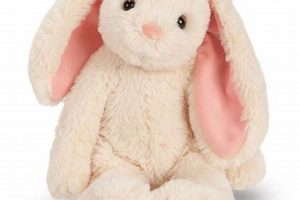
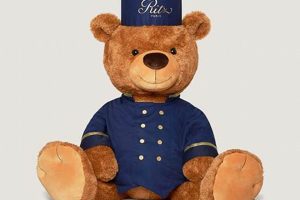
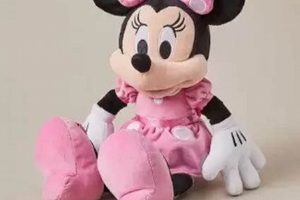
Limited-edition or antique plush toys, often crafted with high-quality materials and embodying unique designs or historical significance, comprise a distinct category within the broader toy market. These items may be based on popular characters, commemorate special events, or represent the work of renowned designers. An example might be a Steiff bear from the early 20th century or a modern artisan-created bear made of mohair with intricate hand-stitching.
These bears hold value beyond mere playthings, serving as investments, historical artifacts, and objects of artistic appreciation. Their rarity and craftsmanship contribute to their desirability among enthusiasts, often leading to significant resale value. Historically, specific manufacturers and designs have played key roles in shaping the evolution of these treasured objects, establishing provenance and lineage that further enhance their appeal. This established heritage contributes to the enduring fascination with these objects, linking collectors to a rich history of artistry and manufacturing.
This exploration delves into the multifaceted aspects of acquiring, preserving, and appreciating these unique items, from identifying valuable pieces to understanding proper care and storage techniques. Furthermore, it will examine the evolving market trends and the passionate community that surrounds them.
Tips for Acquiring and Preserving Valuable Plush Toys
Acquiring and maintaining a collection of high-value plush toys requires careful consideration and informed decision-making. The following tips offer guidance for both novice and seasoned collectors.
Tip 1: Research and Authentication: Thorough research is paramount. Investigate manufacturers, historical periods, materials, and limited-edition releases. Authentication through reputable sources helps ensure legitimacy and protects against counterfeits. Look for certificates of authenticity, manufacturer marks, and consult expert appraisers when necessary.
Tip 2: Condition Assessment: Evaluate the overall condition of a piece. Factors like wear, repairs, and the presence of original tags significantly impact value. Minor imperfections can be acceptable, but significant damage often diminishes desirability and potential investment return.
Tip 3: Proper Storage: Protect plush toys from environmental hazards. Avoid direct sunlight, extreme temperatures, and humidity. Acid-free archival materials, such as tissue paper and storage boxes, prevent deterioration and preserve original condition. Display cases with UV protection offer an ideal solution for showcasing treasured items.
Tip 4: Handling with Care: Gentle handling minimizes wear. Avoid excessive squeezing or rough play, especially with older or delicate items. Clean plush toys only when necessary, using methods appropriate for the materials and age of the piece.
Tip 5: Insurance and Documentation: High-value items warrant specialized insurance coverage. Photograph and document each piece, including details like provenance, purchase price, and condition assessments. This documentation proves invaluable for insurance claims and future appraisals.
Tip 6: Networking and Community Engagement: Connect with other collectors, dealers, and experts. Joining collector clubs, attending auctions, and participating in online forums provides access to valuable information, market insights, and networking opportunities.
Tip 7: Selective Acquisition: Focus on acquiring pieces that align with specific collecting goals, whether focused on a particular manufacturer, character, or historical period. A well-defined focus enhances a collections coherence and value over time.
Adhering to these practices safeguards investments, preserves historical significance, and ensures these cherished objects remain treasured for generations. These strategies contribute to a fulfilling and rewarding collecting experience.
By understanding these core principles, potential collectors can navigate the market with confidence and build collections of enduring value and historical significance.
1. Rarity
Rarity significantly influences the desirability and value of collector teddy bears. A bear’s scarcity contributes to its perceived worth and distinguishes it from mass-produced toys. Several factors contribute to rarity, each playing a crucial role in establishing a bear’s collectible status.
- Limited Production:
Limited editions, often numbered and released in small quantities, create inherent scarcity. Manufacturers may produce bears for a specific event, anniversary, or character license, further restricting availability. The known quantity of these bears in existence directly impacts their perceived value.
- Historical Significance:
Bears associated with specific historical periods or events gain rarity through their connection to the past. Antique bears, particularly those predating World War I, exemplify this historical rarity. Their survival across time, coupled with historical context, elevates their collectible status.
- Unique Design and Materials:
Bears exhibiting unique designs, utilizing unusual materials, or incorporating innovative crafting techniques become rare due to their distinct characteristics. Examples include bears made from unusual fabrics like silk or incorporating intricate hand-embroidery. These unique attributes differentiate them from standard production models.
- Provenance and Documentation:
A documented history of ownership, known as provenance, enhances a bear’s rarity. Bears previously owned by prominent individuals or with a clear chain of custody gain added value. Supporting documentation, such as original purchase receipts or certificates of authenticity, strengthens provenance and further contributes to rarity.
These facets of rarity interrelate, creating a complex interplay that determines a collector teddy bear’s ultimate value and desirability. Understanding these elements empowers collectors to appreciate the nuances of rarity and make informed decisions in acquiring and preserving these treasured objects. The confluence of these factors distinguishes truly exceptional pieces from more common examples, solidifying their place within the realm of high-value collectibles.
2. Historical Significance

Historical significance imbues collector teddy bears with a value transcending mere monetary worth. These objects serve as tangible links to bygone eras, reflecting cultural trends, manufacturing techniques, and societal values. Understanding the historical context surrounding a bear enhances its appeal to collectors and deepens its significance within the broader historical narrative.
- Early 20th Century Manufacturers:
The early 20th century witnessed the rise of prominent teddy bear manufacturers like Steiff, Ideal, and Schuco. Bears from this era often exhibit distinct characteristics, reflecting the manufacturing techniques and materials available at the time. Examining these early examples provides insights into the evolution of teddy bear design and production.
- World War Era Bears:
Teddy bears produced during periods of conflict, such as World War I and World War II, hold unique historical significance. Materials shortages and wartime austerity often influenced their design and construction. These bears offer poignant glimpses into the challenges and resourcefulness of these times.
- Character and Celebrity Licensed Bears:
Bears based on popular characters or celebrities reflect the evolving cultural landscape. These bears capture the zeitgeist of specific periods, documenting popular culture trends and commercial licensing practices. Examples include bears based on early Disney characters or popular literary figures.
- Artisan and Studio Bears:
The emergence of artisan and studio teddy bear makers marks a shift towards handcrafted, limited-edition pieces. These bears often utilize high-quality materials and embody artistic expression. Their creation represents a departure from mass production and a renewed focus on craftsmanship.
The historical significance of collector teddy bears elevates these objects beyond mere playthings. They become artifacts, representing specific moments in time and reflecting cultural, social, and technological developments. Recognizing these historical connections enriches the collecting experience and contributes to the preservation of cultural heritage. By understanding these historical narratives, collectors gain deeper appreciation for the value and significance of these cherished objects.
3. Maker's Marks
Maker’s marks serve as crucial identifiers for collector teddy bears, providing essential information regarding authenticity, manufacturer, and often, the bear’s age. These marks, ranging from sewn-in tags and embroidered symbols to imprinted buttons and stamps, are key to establishing a bear’s provenance and value within the collector’s market. Understanding these marks allows collectors to discern genuine pieces from reproductions, assess the quality and rarity of a bear, and ultimately, make informed acquisition decisions.
- Buttons and Tags:
Companies like Steiff utilize their iconic “button-in-ear” tag, a hallmark signifying authenticity and quality. Variations in button design and material can indicate specific production periods, adding another layer of detail for collectors. Other manufacturers employ unique tags, often featuring their logo or brand name, serving as a primary identifier.
- Embroidered Symbols:
Subtle embroidered symbols, often placed discreetly on the paw pad or chest, can signify a specific maker or a limited-edition release. These markings, sometimes overlooked by casual observers, hold significant meaning for seasoned collectors, offering clues about the bear’s origin and rarity.
- Imprinted Stamps and Labels:
Ink stamps or cloth labels, typically located on the body or inside the bear, often denote the manufacturer and sometimes include production dates or serial numbers. These markings, while potentially prone to fading or damage over time, offer valuable insights into a bear’s history.
- Material Composition and Construction Techniques:
While not strictly maker’s marks, the materials used and the construction methods employed can offer clues about a bear’s origin. Specific types of mohair, stitching patterns, and jointing mechanisms can be indicative of certain manufacturers or eras, providing additional evidence of authenticity and provenance.
The presence, absence, or specific characteristics of maker’s marks contribute significantly to a collector teddy bear’s value and authenticity. Careful examination of these marks, coupled with research and consultation with experts, empowers collectors to identify valuable pieces, build informed collections, and appreciate the rich history and craftsmanship embedded within these cherished objects. The ability to decipher these markings separates discerning collectors from casual enthusiasts, allowing them to navigate the complexities of the market with confidence and precision.
4. Material Quality
Material quality significantly impacts a teddy bear’s collectibility, influencing its value, durability, and aesthetic appeal. Discerning collectors prioritize specific materials, recognizing their contribution to a bear’s overall worth and longevity. The selection of materials often reflects the manufacturing era and the intended purpose of the bear, whether for play or display.
Mohair, a luxurious fabric derived from the Angora goat, stands as a highly sought-after material. Its soft texture, durability, and ability to hold dyes well make it a premium choice for high-end collector bears. Antique bears crafted from mohair often command higher prices due to the material’s enduring quality and vintage appeal. Similarly, early Steiff bears, renowned for their use of high-quality mohair, exemplify the enduring appeal of this material. Synthetic plush fabrics, while more common in mass-produced bears, exhibit varying degrees of quality, influencing their collectibility. Collectors often prioritize plush materials with dense pile and vibrant, fade-resistant colors. The use of inferior plush materials can detract from a bear’s value and longevity, making careful assessment essential. Other materials, such as silk, velvet, or even unusual fabrics like antique lace, contribute to a bear’s uniqueness and collectibility. These unconventional choices often reflect artistic expression or commemorate specific historical periods.
Beyond the primary fabric, internal stuffing materials also play a role in a bear’s long-term preservation. Traditional materials like excelsior (wood wool) or kapok offer firm support and maintain their shape over time, contributing to a bear’s structural integrity. Modern synthetic fillings, while offering softness and hypoallergenic properties, may not possess the same longevity as traditional materials. The quality of stuffing directly impacts a bear’s overall condition and its ability to withstand the test of time. Understanding the nuances of material selection empowers collectors to assess a bear’s construction quality, anticipate its long-term preservation needs, and appreciate the craftsmanship involved in its creation. This knowledge facilitates informed collecting decisions and ensures the preservation of these treasured objects for future generations. The interplay between material quality and other factors, such as maker’s marks and historical significance, contributes to a complex evaluation process, underlining the importance of comprehensive assessment when considering a teddy bear for a collection.
5. Condition
Condition profoundly impacts a collector teddy bear’s value and desirability. Collectors prioritize well-preserved examples, recognizing that condition directly correlates with market price and historical integrity. Assessing condition requires careful examination of various factors, each contributing to a comprehensive understanding of a bear’s state of preservation. A pristine, near-mint condition Steiff bear from the early 1900s, retaining its original tags and exhibiting minimal wear, commands a significantly higher price than a similar bear showing signs of heavy play or repairs. Conversely, even a rare bear with significant damage or missing parts diminishes in value, regardless of its inherent rarity.
Wear, including fabric fading, seam separation, and loss of fur or mohair, represents a natural consequence of age and handling. While minor wear might be acceptable for antique bears, excessive wear detracts from their value. Repairs, while sometimes necessary for preservation, can impact value depending on their extent and quality. Professionally executed repairs, using period-appropriate materials and techniques, are generally preferred over amateur attempts, which can further diminish a bear’s value. The presence of original tags, accessories, and boxes significantly enhances a bear’s desirability. These elements provide evidence of authenticity and careful preservation, increasing a bear’s overall value. For instance, a bear retaining its original manufacturer’s tag and button commands a premium compared to an identical bear missing these components. The presence of original packaging further amplifies this effect, signifying meticulous care and preservation throughout the bear’s history.
Understanding condition allows informed purchasing decisions and appropriate valuation. Recognizing the interplay between condition, rarity, and maker’s marks enables collectors to assess a bear’s overall worth accurately. Proper storage and handling practices become paramount in preserving a bear’s condition, ensuring its long-term value and historical integrity. Ultimately, condition assessment serves as a cornerstone of responsible collecting, safeguarding these treasured objects for future generations and contributing to the preservation of their historical and cultural significance.
6. Provenance Documentation

Provenance documentation establishes an object’s history of ownership, significantly impacting a collector teddy bear’s value and authenticity. This documentation provides a verifiable chain of custody, tracing the bear’s ownership from its creation to its present owner. A well-documented provenance enhances a bear’s desirability, assuring potential buyers of its legitimacy and increasing its market value. For example, a Steiff bear with documented ownership tracing back to a prominent early 20th-century collector commands a premium compared to a similar bear lacking such provenance. Conversely, a bear with gaps or inconsistencies in its ownership history may raise concerns about its authenticity or previous handling, potentially diminishing its value.
Various forms of documentation contribute to a comprehensive provenance. Original purchase receipts, auction records, and appraisal documents provide concrete evidence of ownership and value across time. Letters, photographs, or other historical records connecting the bear to previous owners further enrich its provenance. These documents offer valuable insights into the bear’s journey, adding a layer of historical context and narrative. In cases of particularly significant bears, museum records or exhibition catalogs can serve as compelling provenance documentation, establishing the bear’s historical and cultural importance. The level of detail and the reliability of the documentation directly influence a bear’s perceived value. A continuous, well-documented provenance instills confidence in potential buyers, reassuring them of the bear’s authenticity and historical significance. Conversely, incomplete or questionable documentation can raise doubts and potentially deter serious collectors.
Provenance documentation serves as a cornerstone of responsible collecting, preserving a teddy bear’s history and contributing to its long-term value. This documentation enhances the collecting experience, providing a deeper connection to the object’s past. Furthermore, it contributes to the broader preservation of cultural heritage, safeguarding these tangible links to bygone eras for future generations. Challenges regarding provenance can arise due to lost or incomplete records, particularly with antique bears. Expert authentication and appraisal services can help address these challenges, offering valuable insights and verification when original documentation is unavailable. Ultimately, provenance documentation plays a pivotal role in establishing a collector teddy bear’s value, authenticity, and historical significance within the broader context of cultural heritage preservation.
7. Market Value

Market value, a crucial aspect of collector teddy bears, represents the price a willing buyer would pay a willing seller in a fair transaction. This value, fluctuating based on various interconnected factors, reflects the bear’s rarity, condition, provenance, historical significance, and current market trends. A pristine, early Steiff bear with documented provenance commands a significantly higher market value than a common, mass-produced modern bear. The scarcity of early Steiff bears, coupled with their historical significance and perceived quality, drives demand and consequently, their market value. Conversely, mass-produced bears, lacking rarity and historical context, typically hold lower market values.
Several factors contribute to market value fluctuations. Auction results provide real-time insights into current market demand and pricing trends. A surge in demand for a particular manufacturer or style, driven by renewed collector interest or media attention, can significantly impact market values. Similarly, the discovery of a previously unknown collection or the rediscovery of a rare model can influence prices. Economic conditions also play a role; during periods of economic prosperity, collector markets often experience increased activity and higher prices. Conversely, economic downturns may lead to decreased demand and lower valuations. Condition plays a critical role; a well-preserved bear with original tags and minimal wear commands a higher price than a comparable bear exhibiting damage or repairs. Provenance documentation further influences market value, offering assurance of authenticity and increasing desirability.
Understanding market value dynamics empowers collectors to make informed decisions regarding acquisition, sale, and insurance. Recognizing the interplay of factors influencing market fluctuations allows for strategic collecting and potential investment appreciation. Regularly monitoring auction results, consulting price guides, and engaging with expert appraisers provide valuable insights into market trends and help determine fair market value. While market value offers a quantifiable measure of a bear’s worth, it’s crucial to remember that collecting transcends purely financial considerations. The intrinsic value of these objects, derived from their historical significance, craftsmanship, and sentimental appeal, often holds greater significance for collectors than mere monetary value. However, a clear understanding of market value provides a practical framework for navigating the collector’s market and ensuring responsible stewardship of these cherished objects.
Frequently Asked Questions about Collector Teddy Bears
This section addresses common inquiries regarding the acquisition, care, and valuation of collector teddy bears, providing concise and informative responses to facilitate informed collecting practices.
Question 1: How does one distinguish between a valuable antique teddy bear and a common replica?
Key factors include maker’s marks, material quality, construction techniques, and overall condition. Researching specific manufacturers and historical periods aids in identifying authentic antique bears. Consulting reputable appraisers or experienced collectors offers expert authentication assistance.
Question 2: What are the most crucial factors affecting a teddy bear’s market value?
Rarity, condition, provenance documentation, maker’s marks, and historical significance contribute significantly to market value. A confluence of these factors, coupled with current market demand, determines a bear’s potential worth.
Question 3: How should collector teddy bears be stored to ensure their long-term preservation?
Storage in a cool, dry, dark environment, away from direct sunlight and humidity, is essential. Utilizing acid-free archival materials, such as tissue paper and storage boxes, protects against deterioration. Display cases with UV protection offer a suitable display solution.
Question 4: What are the ethical considerations involved in collecting antique teddy bears?
Respecting cultural heritage, ensuring legal acquisition through reputable sources, and avoiding the purchase of stolen or illicitly obtained items represent fundamental ethical considerations. Supporting responsible collecting practices contributes to the preservation of these historical artifacts.
Question 5: How can one begin building a collection of collector teddy bears?
Begin by researching specific manufacturers, historical periods, or styles of interest. Joining collector clubs, attending auctions, and consulting reputable dealers provide valuable insights and access to authentic pieces. Starting with a focused collecting area allows for a cohesive and meaningful collection development.
Question 6: What resources are available for researching and authenticating collector teddy bears?
Reputable price guides, online forums, collector clubs, and expert appraisers offer valuable resources for research and authentication. Museum collections and historical archives provide additional avenues for in-depth investigation.
Understanding these fundamental aspects empowers informed collecting decisions, contributing to responsible stewardship and the preservation of these cherished objects. Thorough research and careful consideration remain paramount throughout the collecting journey.
This concludes the frequently asked questions section. The subsequent section will delve further into specific collecting areas and offer advanced insights for seasoned collectors.
Collector Teddy Bears
This exploration has delved into the multifaceted world of limited-edition and antique plush toys, examining the factors that elevate these objects from playthings to cherished collectibles. Rarity, historical significance, maker’s marks, material quality, condition, and provenance documentation all contribute to a bear’s value and desirability within the collector’s market. Understanding these interconnected elements empowers informed acquisition, preservation, and appreciation of these treasured artifacts. Market value, while fluctuating based on demand and trends, reflects the confluence of these attributes, providing a framework for assessing worth within the collecting community.
These objects represent more than mere toys; they embody tangible links to history, craftsmanship, and cultural heritage. Preserving these objects safeguards not only their inherent value but also the stories they represent. Continued research, responsible collecting practices, and ongoing community engagement ensure these cherished companions remain treasured for generations to come, their legacy woven into the fabric of collecting history.