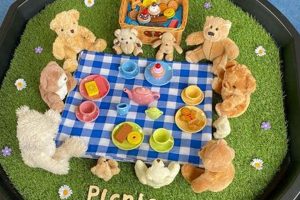
A child’s act of nurturing a stuffed animal as if it were unwell can be viewed as a form of symbolic play known as therapeutic role-playing. This activity frequently involves bandaging imagined injuries, offering comfort, and mimicking caregiver behaviors observed in real life or media. For instance, a child might use a spoon as a medical instrument or a blanket as a hospital bed for their plush companion.
This type of play is considered valuable for children’s development. It allows them to process potentially stressful experiences related to illness or medical care, reducing anxiety and fostering empathy. By acting as the caregiver, children gain a sense of control and mastery over situations that might otherwise feel frightening or overwhelming. Historically, dolls and stuffed animals have served as companions and tools for emotional expression, but the specific act of simulated medical care with these toys reflects modern advancements in healthcare and a growing awareness of children’s emotional needs.
This exploration of childhood play and its inherent therapeutic benefits serves as a foundation for further discussion on related topics such as play therapy techniques, the role of toys in emotional development, and strategies for supporting children’s emotional well-being.
Tips for Facilitating Therapeutic Play
Encouraging nurturing behaviors directed towards plush toys can offer significant benefits for children’s emotional development. The following suggestions provide guidance for caregivers and educators seeking to support this form of play.
Tip 1: Provide realistic props. Offering items like bandages, empty medicine bottles (cleaned and safe), toy stethoscopes, or even craft materials for creating miniature crutches can enhance the realism and imaginative potential of therapeutic role-playing.
Tip 2: Observe and listen attentively. Pay attention to the narratives children create during their play. This provides valuable insights into their understanding of health, illness, and caring behaviors.
Tip 3: Validate emotions. Acknowledge the feelings expressed through the play, even if they seem exaggerated or based on fictional scenarios. This validation helps children feel understood and supported.
Tip 4: Avoid directing the play. Allow children to lead the narrative and explore their own interpretations of caregiving. Intervention should be minimal, offering gentle guidance only when necessary.
Tip 5: Use play as a communication tool. If a child is experiencing anxiety about a medical procedure or illness, therapeutic role-playing can be a safe space to discuss these concerns indirectly.
Tip 6: Integrate stories and examples. Reading books or sharing personal anecdotes about medical experiences can provide context and vocabulary for children to incorporate into their play.
Tip 7: Respect the childs boundaries. Some children may not engage in this form of play, and that is perfectly normal. Respect their choices and offer alternative avenues for emotional expression.
By implementing these strategies, adults can help children harness the therapeutic power of play, fostering resilience, empathy, and a deeper understanding of health and well-being.
These tips provide practical guidance for supporting children’s emotional growth through play, paving the way for a concluding discussion on the broader implications of this important developmental activity.
1. Nurturing Play

Nurturing play, a fundamental aspect of childhood development, finds a distinct expression in the “teddy doctor” phenomenon. This form of play, characterized by caregiving behaviors directed towards toys or objects, offers valuable insights into a child’s emotional landscape and capacity for empathy. Examining the facets of nurturing play provides a deeper understanding of its connection to “teddy doctor” activities.
- Imitation of Observed Behavior
Children frequently replicate behaviors witnessed in their environment, particularly those related to caregiving. A child might mimic a parent soothing a younger sibling or reenact scenarios observed during medical appointments. In “teddy doctor” play, this imitation manifests as bandaging a stuffed animal’s “injury” or offering it comfort. This mirroring of adult actions reflects a child’s attempt to understand and process these experiences.
- Emotional Regulation
Nurturing play offers children a safe avenue for expressing and regulating emotions. By caring for a toy, a child can indirectly address anxieties or fears related to illness, injury, or separation. “Teddy doctor” scenarios allow children to project their feelings onto the toy, gaining a sense of control over situations that might otherwise feel overwhelming.
- Development of Empathy
The act of caring for another, even a toy, cultivates empathy and compassion. “Teddy doctor” play requires children to consider the needs and feelings of their plush patient, fostering an understanding of perspectives beyond their own. This nurturing behavior lays the groundwork for prosocial behaviors and strengthens social-emotional intelligence.
- Cognitive Development
Nurturing play also contributes to cognitive development by encouraging problem-solving and symbolic thinking. Children must assess the “illness,” determine appropriate “treatments,” and adapt their play based on the toy’s imagined responses. This process strengthens cognitive flexibility and enhances their understanding of cause and effect.
These interconnected facets of nurturing play illuminate the significance of “teddy doctor” activities in child development. By offering a safe and engaging platform for emotional expression, cognitive exploration, and the development of empathy, this form of play contributes significantly to a child’s overall well-being and social-emotional growth. This understanding highlights the value of providing opportunities and resources that support and encourage nurturing play in children’s lives.
2. Symbolic Healing

Symbolic healing plays a crucial role in “teddy doctor” play, offering children a safe and effective way to process complex emotions related to illness, injury, and caregiving. This form of play allows children to enact healing rituals on their plush companions, providing a sense of control and mastery over situations that might otherwise feel overwhelming or frightening. The act of bandaging a stuffed animal’s imagined wound or administering pretend medicine becomes a symbolic representation of addressing real-life anxieties and fears. For example, a child who has recently undergone a medical procedure might engage in “teddy doctor” play to reenact the experience and symbolically heal their own emotional wounds. This process can be particularly beneficial for children struggling to articulate their feelings verbally, offering a non-threatening outlet for emotional expression.
The importance of symbolic healing within “teddy doctor” play extends beyond simply addressing personal anxieties. It also fosters empathy and compassion by encouraging children to consider the needs and feelings of others. By caring for their “sick” toy, children develop a deeper understanding of the caregiving role and the emotional impact of illness. This experience can translate into increased sensitivity and support for others experiencing similar challenges in real life. For instance, a child engaging in “teddy doctor” play might become more attuned to the needs of a sick family member or classmate, demonstrating greater empathy and understanding.
Understanding the significance of symbolic healing in “teddy doctor” play provides valuable insights for parents, educators, and therapists. Recognizing this form of play as a powerful tool for emotional processing and empathy development allows adults to create supportive environments that encourage and facilitate such activities. Providing children with realistic medical play props and offering gentle guidance can enhance the therapeutic benefits of this symbolic play. Furthermore, observing children’s “teddy doctor” narratives can offer valuable clues about their emotional state and any underlying anxieties they might be experiencing. This understanding allows for targeted interventions and support, ultimately promoting children’s emotional well-being and resilience.
3. Emotional Processing

Emotional processing forms a cornerstone of “teddy doctor” play. Children frequently utilize this form of symbolic play to navigate complex emotions related to illness, injury, or medical experiences. The act of caring for a “sick” stuffed animal provides a safe space to explore anxieties, fears, and concerns indirectly. Cause and effect are intertwined in this process: a real-life experience, such as a doctor’s visit or witnessing a loved one’s illness, can trigger emotional responses that are then processed through “teddy doctor” play. The play itself becomes a means of understanding and integrating these experiences. For example, a child witnessing a parent receiving an injection might later reenact the scenario with their teddy bear, expressing and working through potential anxieties related to needles or medical procedures.
The importance of emotional processing as a component of “teddy doctor” play cannot be overstated. It allows children to gain a sense of mastery over situations that might otherwise feel overwhelming. By taking on the role of the caregiver, they symbolically reverse roles and gain control over the narrative. This can be particularly empowering for children who have felt powerless or vulnerable during their own medical experiences. Furthermore, “teddy doctor” play allows children to experiment with different coping mechanisms and develop emotional regulation skills. They can practice providing comfort and reassurance, both to their toy and indirectly to themselves. This process fosters resilience and strengthens their ability to manage challenging emotions in real-life situations. A child comforting their teddy bear after a pretend fall, for example, is simultaneously practicing self-soothing techniques and building emotional resilience.
Understanding the connection between emotional processing and “teddy doctor” play has significant practical implications. Parents, educators, and therapists can utilize this knowledge to support children’s emotional well-being. Observing “teddy doctor” play can provide valuable insights into a child’s emotional state, revealing underlying anxieties or concerns that might not be expressed verbally. This understanding allows for targeted interventions, such as providing reassurance, offering age-appropriate explanations about medical procedures, or engaging in conversations about feelings. By recognizing and supporting “teddy doctor” play as a valuable tool for emotional processing, adults can empower children to navigate complex emotions and develop healthy coping strategies. Furthermore, this understanding highlights the crucial role of play in fostering emotional intelligence and resilience in children.
4. Reduced Anxiety

The capacity of “teddy doctor” play to mitigate anxiety in children represents a significant benefit of this activity. By engaging in simulated caregiving scenarios, children can address and process anxieties related to illness, injury, and medical experiences. This exploration delves into the mechanisms through which “teddy doctor” play contributes to reduced anxiety.
- Control and Mastery
Children often experience a lack of control during medical procedures or when witnessing illness in others. “Teddy doctor” play allows them to reverse roles, taking on the position of the caregiver and thereby gaining a sense of control over the situation. This shift in power dynamics can be empowering, mitigating feelings of helplessness and reducing anxiety. A child who felt anxious during a recent doctor’s visit, for example, might reenact the experience with their teddy bear, taking on the role of the doctor and asserting control over the narrative.
- Emotional Expression and Regulation
“Teddy doctor” play provides a safe and non-threatening outlet for expressing complex emotions related to health and illness. Children can project their anxieties onto their stuffed animals, acting out scenarios and experimenting with different emotional responses. This process facilitates emotional regulation and can reduce anxiety by allowing children to externalize and process their feelings. A child might express their fear of hospitals by having their teddy bear undergo a pretend surgery, thereby confronting and processing their anxiety.
- Desensitization to Medical Experiences
Repeated exposure to medical themes through play can desensitize children to potentially anxiety-provoking situations. By repeatedly enacting medical scenarios with their teddy bears, children become more familiar and comfortable with the concepts and procedures associated with healthcare. This familiarity can reduce anxiety associated with future medical encounters. For instance, a child who regularly pretends to give their teddy bear injections might experience less anxiety during their own vaccinations.
- Cognitive Reframing
“Teddy doctor” play encourages children to reframe their understanding of illness and medical care. By taking on the role of the caregiver, they gain a different perspective on the experience. This cognitive reframing can reduce anxiety by shifting the focus from being a passive recipient of care to an active participant in the healing process. A child who has been hospitalized might, through “teddy doctor” play, reframe their experience as an opportunity for healing and recovery, rather than a source of fear and anxiety.
These interconnected facets demonstrate how “teddy doctor” play can contribute to reduced anxiety in children. By providing a safe space for emotional expression, fostering a sense of control, and promoting cognitive reframing, this form of play empowers children to navigate complex emotions and develop healthy coping mechanisms related to health and illness. This understanding reinforces the importance of supporting and encouraging such play as a valuable tool for promoting children’s emotional well-being.
5. Empathy Development
Empathy development represents a significant benefit derived from “teddy doctor” play. The act of nurturing and caring for a stuffed animal, even in a simulated context, cultivates empathetic responses in children. This connection stems from the inherent nature of the activity, which requires children to consider the needs and feelings of another being, albeit a plush representation. Cause and effect are evident: engaging in “teddy doctor” play, the cause, leads to enhanced empathy, the effect. For instance, a child comforting a teddy bear after a pretend injury demonstrates an understanding of emotional distress and a desire to alleviate it, laying the foundation for empathetic responses in real-life situations.
The importance of empathy development as a component of “teddy doctor” play should not be underestimated. Empathy, the ability to understand and share the feelings of others, is crucial for navigating social interactions and building healthy relationships. “Teddy doctor” play provides a safe and accessible platform for children to practice empathetic behaviors. By assigning emotions and needs to their stuffed animals, they develop the capacity to recognize and respond to emotional cues in others. A child pretending to administer medicine to a “sick” teddy bear, for example, demonstrates an awareness of the discomfort associated with illness and a desire to provide care and comfort, reflecting the development of empathetic concern. This process strengthens social-emotional intelligence and promotes prosocial behaviors.
Understanding the link between “teddy doctor” play and empathy development offers valuable practical applications. Parents and educators can leverage this knowledge to create environments that foster empathy in children. Providing opportunities for “teddy doctor” play, along with appropriate props like bandages and toy medical kits, can encourage children to explore caregiving roles and develop empathetic responses. Furthermore, observing children engaged in this type of play can offer insights into their emotional development and capacity for empathy. Recognizing the significance of this connection reinforces the value of play in fostering crucial social-emotional skills. This understanding allows adults to provide targeted support and guidance, nurturing the development of empathy in children and equipping them with the emotional intelligence necessary for building positive relationships and navigating complex social situations.
6. Mastery of Situations
The concept of mastery plays a crucial role in “teddy doctor” play, providing children with a sense of control and agency over situations that might otherwise feel overwhelming or unpredictable. This activity allows children to symbolically recreate and manage challenging experiences, fostering resilience and reducing anxiety related to illness, injury, and medical care. The following facets explore the connection between “mastery of situations” and “teddy doctor” play.
- Role Reversal and Control
Children often experience a sense of powerlessness during medical procedures or when witnessing illness in loved ones. “Teddy doctor” play allows for role reversal, placing the child in the position of the caregiver. This shift in dynamics empowers children to take control of the narrative, symbolically managing the situation and mitigating feelings of helplessness. A child who felt anxious during a recent doctor’s visit, for example, might reenact the experience with their teddy bear, assuming the role of the physician and dictating the course of the “treatment.”
- Predictability and Repetition
Medical experiences can be unpredictable and anxiety-inducing for children. “Teddy doctor” play offers an opportunity to create predictable and repeatable scenarios. By controlling the narrative and repeating the play sequence, children gain a sense of mastery over the experience, reducing anxiety associated with the unknown. A child might repeatedly bandage their teddy bear’s “injury,” gaining comfort and control through the predictable nature of the activity.
- Symbolic Problem-Solving
“Teddy doctor” play presents opportunities for symbolic problem-solving. Children must assess the “illness,” determine appropriate “treatments,” and adapt their play based on the imagined responses of their plush patient. This process fosters a sense of competence and mastery, reinforcing their ability to navigate challenging situations. A child might experiment with different remedies for their teddy bear’s pretend cold, symbolically exploring solutions and demonstrating problem-solving skills.
- Emotional Regulation through Play
Managing emotions related to illness and medical care can be challenging for children. “Teddy doctor” play provides a safe space to explore and regulate these emotions. By acting out scenarios and providing comfort to their stuffed animals, children gain a sense of mastery over their emotional responses, building resilience and coping skills. A child comforting their teddy bear after a pretend accident, for example, is simultaneously practicing self-soothing techniques and developing emotional regulation strategies.
These interconnected facets demonstrate how “teddy doctor” play contributes to a child’s sense of mastery over potentially challenging situations. By providing opportunities for role reversal, predictable scenarios, symbolic problem-solving, and emotional regulation, this form of play fosters resilience, reduces anxiety, and empowers children to navigate complex emotions related to health and illness. This understanding underscores the importance of supporting and encouraging “teddy doctor” play as a valuable tool for promoting children’s emotional well-being and development.
7. Therapeutic Role-Playing
Therapeutic role-playing serves as a cornerstone of “teddy doctor” activities, offering children a powerful tool for processing complex emotions, developing coping mechanisms, and gaining a sense of mastery over potentially challenging experiences. This form of play allows children to enact various scenarios related to illness, injury, and medical care, providing a safe and controlled environment for exploring anxieties and practicing caregiving behaviors. Cause and effect are clearly intertwined: engaging in therapeutic role-playing, the cause, leads to emotional processing and reduced anxiety, the effect. For instance, a child who has witnessed a loved one undergoing medical treatment might reenact the experience with their teddy bear, processing their emotions and gaining a sense of control over the situation through play.
The importance of therapeutic role-playing as a component of “teddy doctor” activities should not be underestimated. It provides a unique opportunity for children to externalize internal anxieties and fears, making them more manageable and less overwhelming. By taking on the role of the caregiver, children gain a sense of agency and control, reversing the power dynamics often experienced during medical procedures or when witnessing illness in others. This can be particularly empowering for children who have felt vulnerable or powerless in such situations. Furthermore, therapeutic role-playing allows children to experiment with different coping strategies and develop emotional regulation skills. A child comforting their teddy bear after a pretend injury, for example, is simultaneously practicing self-soothing techniques and developing emotional resilience. This process strengthens their ability to manage challenging emotions in real-life contexts.
Understanding the profound connection between therapeutic role-playing and “teddy doctor” activities has significant practical implications. Parents, educators, and therapists can leverage this knowledge to create supportive environments that encourage and facilitate such play. Providing children with realistic medical play props, such as bandages, toy stethoscopes, and empty medicine bottles (cleaned and safe), can enhance the therapeutic value of this activity. Moreover, observing children’s narratives during “teddy doctor” play can provide valuable insights into their emotional state and any underlying anxieties they may be experiencing. This understanding enables targeted interventions and support, ultimately promoting emotional well-being and resilience in children. Recognizing and valuing therapeutic role-playing as an integral part of “teddy doctor” activities underscores the vital role of play in fostering healthy emotional development and coping skills in children. This insight empowers adults to provide children with the tools and support necessary to navigate complex emotions and build resilience in the face of challenging experiences.
Frequently Asked Questions
This section addresses common inquiries regarding children’s play involving simulated medical care for toys, often referred to as “teddy doctor.”
Question 1: At what age do children typically begin engaging in “teddy doctor” play?
This type of play often emerges during the preschool years, coinciding with increased social awareness and imaginative play. However, the specific age can vary depending on individual development and exposure to medical contexts.
Question 2: Is “teddy doctor” play indicative of underlying anxiety or trauma related to medical experiences?
While this play can sometimes reflect a child’s attempt to process anxieties, it is often a normal part of development. It does not automatically signal underlying trauma. However, consistently anxious or repetitive play warrants further observation and potential consultation with a professional.
Question 3: How can caregivers support and encourage “teddy doctor” play in a healthy and beneficial way?
Providing realistic (but safe) props, actively listening to the child’s narratives during play, and validating their expressed emotions can create a supportive environment. Avoid directing the play or imposing adult interpretations.
Question 4: What are the potential benefits of “teddy doctor” play for children’s development?
This type of play can foster empathy, emotional regulation skills, and a sense of mastery over potentially stressful situations. It also contributes to cognitive development through symbolic thinking and problem-solving.
Question 5: When should a caregiver consider seeking professional guidance regarding a child’s “teddy doctor” play?
If the play becomes excessively repetitive, reflects intense anxiety or distress, or involves concerning themes, consulting a child psychologist or play therapist might be beneficial.
Question 6: Are there cultural variations in how “teddy doctor” play manifests or is interpreted?
Cultural contexts can influence how children perceive and enact caregiving roles. Variations in healthcare practices and family structures can shape the specific scenarios and narratives observed in this type of play.
Understanding the nuances of “teddy doctor” play and its developmental implications allows for informed support of children’s emotional and social growth. Observation, active listening, and appropriate guidance are crucial for maximizing the benefits of this valuable form of play.
Further exploration of related topics, such as play therapy techniques and the role of play in emotional development, can provide additional insights into this important area of child development.
Conclusion
This exploration has delved into the multifaceted nature of “teddy doctor” play, highlighting its significance as more than simply a childhood pastime. The act of providing simulated medical care to stuffed animals serves as a valuable tool for emotional processing, anxiety reduction, and the development of empathy and coping skills. The analysis has examined the interplay of nurturing behaviors, symbolic healing, and therapeutic role-playing within this form of play, emphasizing its contribution to children’s overall well-being and social-emotional development.
Recognizing the profound impact of “teddy doctor” play on children’s emotional landscapes underscores the need for continued research and awareness. Further investigation into the cultural variations and therapeutic applications of this form of play can provide deeper insights into its potential benefits. Encouraging and supporting children’s engagement in such activities, coupled with attentive observation and appropriate guidance, offers a valuable avenue for fostering emotional intelligence, resilience, and a deeper understanding of health and well-being. Ultimately, valuing and facilitating “teddy doctor” play represents an investment in children’s emotional growth and their capacity for empathy and care.